Clinical and business intelligence

David Miles, CIO of Oklahoma Heart Hospital, discusses how the all-digital healthcare system changed from a Cerner EHR to Epic - and the importance of peer assistance, resource availability and defined responsibilities during the process.

Dr. Eric Lieberman, CEO of CybersolutionsMD, discusses advising care organizations on ensuring collaborative decision-making in cybersecurity for patient safety - and the government’s role in helping organizations protect their technologies.

Donald Rucker, chief strategy officer at 1upHealth, discusses the details associated with CMS' Medicare Star Ratings, balancing the complexity and interest of patients and taxpayers, and what plans need to do to up their rating.
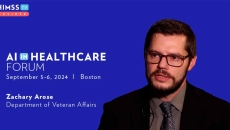
Zachary Arose, healthcare technology management chief at the Dayton VA Medical Center, says the VA has integrated an AI algorithm for early detection of lung nodules. AI is also adding administrative and bureaucratic efficiencies.
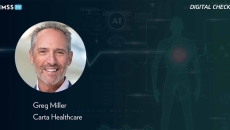
Over the next year health system IT leaders can expect real and pragmatic applications of AI beyond the experimentation mode into real projects with real value, says Greg Miller, vice president of business development at Carta Healthcare.

The partners will work to bring AI-powered motion-capture technology to the physical therapy market in order to reduce administrative workloads.

The pharma giant will integrate more than 20 AI algorithms from eight collaborators into its navify Digital Pathology enterprise software to help improve pathology workflows.

Digital health companies need to think about what will happen 10 to 15 years from now to create strategies that ensure growth and longevity, says Dr. Guido Giunti, adjunct professor of digital health at the University of Oulu in Finland.

Also, PenCS has launched a new stroke functionality.

The company will use the funds to expand the adoption of its surgical software and fund mergers and acquisitions.