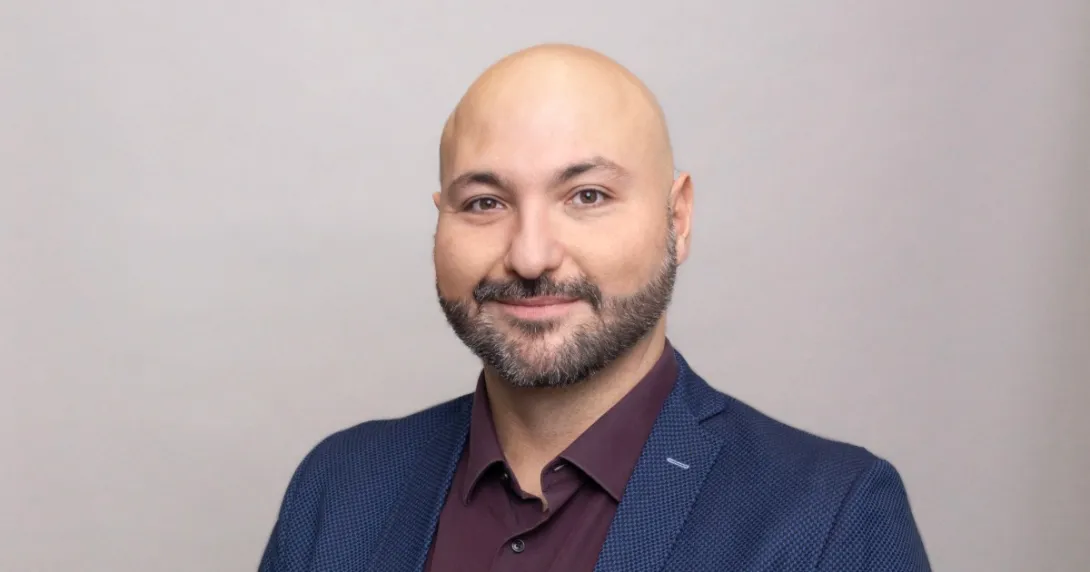
Dr. Guido Giunti, chief data officer at St. James' Hospital and adjunct professor at Trinity College Dublin and the University of Oulu
Photo courtesy of Dr. Guido Giunti
Dr. Guido Giunti, chief data officer at St. James' Hospital and adjunct professor at Trinity College Dublin and the University of Oulu, sat down with MobiHealthNews to preview his upcoming talk at the 2026 HIMSS Global Health Conference & Exposition in Las Vegas in March, where he'll emphasize the importance of clinicians and administrators understanding not just what AI can do, but where it can fail to avoid adding stress to the already overburdened healthcare workforce.
MobiHealthNews: Why is digital literacy so important when considering AI implementation in the healthcare setting?
Dr. Guido Giunti: You wouldn’t hand over a scalpel to someone who doesn’t know how sharp it is. Now imagine handing them an AI tool that can influence diagnoses or treatments without them knowing the fundamentals of how it works or, more importantly, how it fails. That’s the real risk.
AI can do amazing things, I’m a big AI person, but if clinicians and administrators don’t understand what’s under the hood, even just a bit, they can’t ask the right questions, interpret the results critically or challenge the system when it goes off track. And it will go off track. I like to say that AI is not magic; it’s math and data with a really good PR team.
This is exactly what we’ve been addressing through our work in collaboration with the European Union SUSA Consortium, where digital literacy is treated as a core competence for healthcare professionals, not as an optional add-on, but as a safety, quality and sustainability issue.
Now, digital literacy isn’t about turning healthcare staff into programmers or data scientists. It’s about helping them become informed skeptics, capable of navigating this new ecosystem safely. If we want AI to be empowering, we need to understand that adding this tech without sufficient training will just add more stress to already overburdened staff.
MHN: In what ways do you approach transformation as a strategic change initiative?
Giunti: I’m originally from Argentina, so you’ll forgive the expression, but I like to approach digital transformation like a tango: It’s a matter of coordination, trust and knowing that you will step on each other's toes at first.
My approach is participatory: I co-create solutions with the people who will actually use them. I’ve seen too many great ideas crash because no one talked to the nurse who was supposed to use it at 2 a.m. It takes a lot more time, but the reality is that AI and digital are not going anywhere, and strategic change in healthcare is more than adopting new tools. That’s why I try to bring together a little bit of design thinking, organizational awareness and strategic foresight into the mix. Also, coffee. A lot of coffee.
If we’re only fixing today’s problems, we’re missing the point. And yes, sometimes you have to provoke a little. Transformation is uncomfortable. If no one is a bit uncomfortable in the room, you’re probably just optimizing the status quo. Not for the sake of disruption, but because disruption is already here. I see it as my job to help people navigate it with their eyes open and their feet grounded.
MHN: What do you hope attendees will learn from your talk?
Giunti: Honestly? I want them to see that AI isn’t some shiny object to be "implemented"; it’s a catalyst for reimagining care, culture and even what it means to be a healthcare professional in the digital age.
I want them to ask better questions. Especially the uncomfortable ones, like, "Is this tech serving patients or just making dashboards prettier?" or "Are we digitizing care, or just digitizing bureaucracy?"
But most of all, I want them to feel like they can lead change, even if it’s just one small step. You don’t need to be at the C-level to shape the future of healthcare. Sometimes it starts with a new question, a new ally or simply refusing to keep using that legacy software from 1997 that crashes every time you sneeze near it.
And if they laugh once or twice along the way? Even better. We’re doing serious work, but no one said we have to be serious all the time.
Dr. Guido Giunti's HIMSS26 session "AI Won’t Transform Hospitals, People Will: A Chief Data Officer’s Journey Toward Literacy-First Digital Transformation" is scheduled for Tuesday, March 12, from 8:30-9:30 a.m. in Lido 5 I Level 5 at the Venetian in Las Vegas.