Photo: Phil Boorman/Getty Images
An AI foundation model meant to "interpret and understand" the human brain using thousands of brain wave records has been introduced in India.
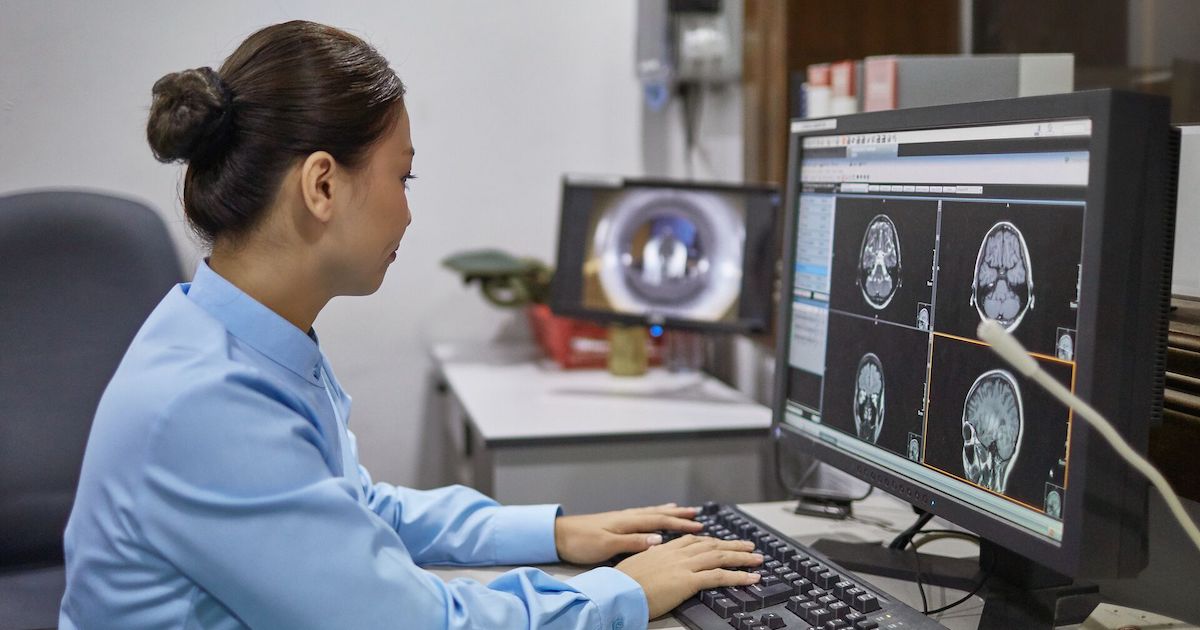
Touted as a first of its kind in India, the brain language foundation model dubbed MANAS-1 uses brain electrophysiology – primarily through electroencephalogram (EEG) – as a "structured biological language," Dr Puneet Agarwal, chairman and founder of Intellihealth (NeuroDX), which created the technology, explained in a LinkedIn announcement.
The model was initially trained on 60,000 hours of brain wave records from more than 25,000 patients globally.
WHY IT MATTERS
Dr Agarwal, who is also a professor of Neurology at Max Super Speciality Hospital in New Delhi, said MANAS-1 enables the "scalable, accurate, and early" detection of neurological and psychiatric disorders, potentially providing a unified AI framework for brain health screening and precision neuroscience.
The model, he said, is capable of interpreting brain functional connectivity and neural network dynamics.
Citing findings from research, the neurologist said that the model has "achieved 95% accuracy in identifying computational biomarkers of epilepsy and mental health disorders," showing potential as an "affordable and non‑invasive brain health screening platform."
According to Dr Agarwal, MANAS-1 has applications in neurological diagnosis, psychiatry, cognitive assessment, and brain-computer interface systems, and can be deployed at scale across primary to tertiary health centres.
From current 400 million parameters (or the variables it learns from the training data), NeuroDX is working to scale the model to 2 billion parameters. A news report notes that a second version, MANAS-2, is coming out in the coming weeks.
THE LARGER TREND
A similar AI-driven tool, developed and introduced last year by researchers in Singapore, assists with analysing brain activity. By identifying brain regions and how they function individually and dynamically with other regions, the Brain-JEPA model can also enable early and accurate diagnoses of brain disorders, predict disease progression, and support personalised treatment plans.
A large language model in South Korea, developed by the government-backed Electronics and Telecommunications Research Institute, can predict a senior person's risk of dementia from their voice-recorded conversation.
Meanwhile, India's development of AI foundation models in healthcare has received close support from tech giant Google. Late last year, it started investing in and collaborating with the All India Institute of Medical Sciences and the Indian Institute of Science to create specialised AI tools for dermatology and outpatient department triaging. A month later, in January, it made public its open LLM, MedGemma 1.5, in the country.
ON THE RECORD
"This technology [MANAS-1] represents a major step toward transforming neurological diagnostics, advancing neuroscience research, and enabling next‑generation brain‑computer interfaces," Dr Agarwal noted in his announcement.