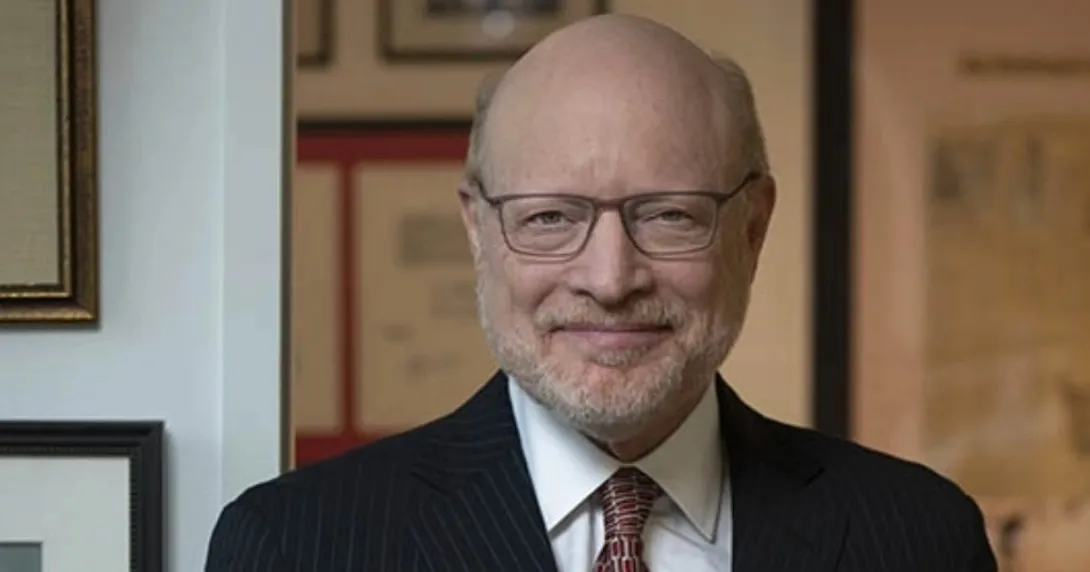
Charles N. Kahn III, president and CEO of the Federation of American Hospitals and cofounder of Future of Health
Photo courtesy of Future of Health
LOS ANGELES – At the Future of Health Annual Summit in November, Charles N. Kahn III (Chip), president and CEO of the Federation of American Hospitals and cofounder of Future of Health, sat down with MobiHealthNews for an in-person interview to discuss loss of trust in the public health sector and AI's emergence and ever-changing role in healthcare.
MobiHealthNews: How can the public health sector in particular benefit from AI, machine learning and other healthcare technologies?
Chip Kahn: I think that these new technologies are game changers in terms of analyzing data and other kinds of information. I think the question and concern I have about where we're headed with federal policy is whether or not the data that is needed is going to be collected and/or whether it is going to be accessible.
We're entering into a period in which clinicians, public health officers, anybody that has access to any datasets, can do amazing analysis and gain tremendous understanding. I just hope that policy enables that.
MHN: What are you most concerned about regarding policy?
Kahn: Well, literally, I mean, HHS has cut back so much, and there are questions about the surveys they do and the data they collect, you know, still being collected, and we have 50 states and the other territories, and the information is not consistent, necessarily, across all the states. So, I'm worried about the future of the data, but I'm optimistic about the future of the capacity to assess the data.
MHN: Kind of the incomplete aspect of the data?
Kahn: Yes, and also, we do have a lot of issues in this country, obviously and appropriately, around privacy and confidentiality, and I don't know how that is going to get digested. In the near term, I don't think Congress or the executive branch have the inclination to really be able to come to a consensus for any new rules.
I know there's some policy that the White House has laid out, but to me, it's still pretty laissez faire, and I think in the near term, that's probably appropriate so we can determine what the best rules are.
Actually, when I worked on Capitol Hill in 1996, I was one of the staff members that was responsible for the HIPAA privacy rules, and it was interesting, the Health Insurance Portability and Accountability Act (HIPAA) was included in a number of provisions that was insurance reform and other health provisions, and actually, the privacy aspect and confidentiality aspect of it was just a few lines with the thought that Congress would come back and write the rules.
But we had a default, which is, if Congress didn't act within a certain amount of time, then Health and Human Services, the executive branch, would write the rules. We never thought it would ever get to that, and actually, Congress couldn't come to a consensus, and at the end of the day, it was HHS that wrote the rules.
I think it will be very difficult for them, particularly in this divisive period with all these different points of views and strong feelings about things, to come to grips with this issue on the implications of AI. I mean, there's a lot of discussion; they have hearings and things.
So, it may be a little bit of the Wild West for a while, but there are a lot of people in the medical community that are – and we're at the Future of Health meeting, where there's a lot of discussion about this – there are a lot of people who are thinking about ways to use AI effectively, both on the services side and the care side, as well as on the operational side of healthcare institutions. So, I'm encouraged about that.
The public health question you asked, going back to your original question, I don't think that the public health infrastructure came through COVID very well, and we are in this weird period of distrust in public health to a tremendous extent.
I mean part of [public health's] function is collecting data and letting providers know about various trends in illness. In the fall, hospitals are always very concerned to find out about what the respiratory rate is to see whether or not they are going to be full of people with flu or not, but particularly in this period when we are sort of worried about various trends with measles or with other illnesses, and then always the potential now, I think more with climate change, of COVID 2.0 or COVID-like 2.0, I'm worried that the public trust isn't there that would be really necessary for the public health officials to guide the public through some kind of crisis.
MHN: Do you think that public trust in the public health sector can be regained?
Kahn: I would hope so. I don't know. I could say a cliche – it's always darkest before the light. So, hopefully, at some stage over the next few years, we get away from conspiracies and back to basics. So, I hope so.
I mean, frankly, over the last 100 years or 120 years or so, what's the most significant things that have happened in America's health? All those things are public health. I mean, whether it's clean water or clean drainage or other aspects or vaccines. I mean, those are the things that have made a big difference.
Medical science is there, and clearly people are living longer that have cardiac disease and others because of the treatments and the miracles we have of modern medicine, but at the end of the day, it was public health that got us from an average of 20 or 30 years of life up into the '70s.
MHN: Are there any technologies that you think will be obsolete in 10 years in healthcare?
Kahn: Well, first you have had a trend over the last many years, particularly on the procedure side, what had to be for medical reasons inpatient procedures now going outpatient and being done in all different kinds of settings.
So first, you've had a transformation of the hospital, and the inpatient side of the hospital really is more and more just for tertiary care, for medical patients who are just really, really sick, or complex issues around surgery, you know, complex surgeries or others. So, you have already had a big change, which, to me, answers your question partly, which is the hospital today – it won't be 10 years from now. It wasn't what it was even five years ago or 10 years ago.
And also, you know, even the hospital at home is part of our future because of the advances in monitoring and other kinds of technologies. I don't know if we have the workforce to make it work because you have to have people in this continuum of care. But, yeah, technology has made a big difference there.
At the end of the day, for all of us, there's reversion to the mean, which means that you will get old and you will, at some point, get sick. And so, no matter how much all these medical miracles put it off, we're still going to need healthcare, and we are still going to need hospitals and all the others and we're still going to need procedures.
But I think that we are at a point where science is making great leaps at the same time, we're making great data leaps (the ability to use data), which will have a big impact on the science right and what we ought to be doing for people.
I think precision medicine, to me, was a little bit of a pipe dream, until this ability to really use the data in such a way that you have these monitors in the hospital, for example, when we think about technology, that are monitoring patients all the time. There were usually alarms on them when something would go awry, but we didn't really have any use for the continuous monitoring in terms of really helping the patient unless something happened.
Now, you have the ability to take continuous monitoring and analyze it in such a way that we couldn't do previously, and understand what it means, what it's telling us.
MHN: And not just about one patient.
Kahn: Right. Not just about that patient, but patterns in patients and all that will come back to help individuals, obviously. So, a lot is going to change.
MHN: With the growing use of generative AI, which often learns from its own outputs, do you think this could ultimately cause more harm than good given the incomplete data it’s trained on?
Kahn: I mean, you now have hallucinations and other issues. I think, you know, obviously you have your apocalyptic predictions about what would happen with AI. Put those aside for a moment.
I assume, as it becomes more sophisticated in itself, that it will be able to diagnose its own issues that don't make sense in terms of hallucinations and other kinds of flaws, and you'll be able to teach it what to look for. I don't know how far that's off, and I'm just an observer here, but I assume that that's one of the things the scientists who are working with it are going to be seeking so that it becomes more foolproof.
But this is where the humans come in, and I think it depends on the use case. On the other hand, I would also be confident that there are use cases where you are going to see miraculous stuff, such as on the operation side. And on the clinical side, you will too, but, you know, there are areas that cross over.
One of my companies is working on shift changes, so the information chain transfers between one set of nurses leaving and another set of nurses coming in is seamless. It takes 45 minutes now, on average, and they think they can get it down to 20 minutes. That's going to have clinical implications too, going back to what I said about monitoring, because now they're going to have information about the patient's vital signs that are an assessment of the continuous aspect of it.
You're also just going to have better information and less likelihood of mistakes because everything's going to be in the data. So, I'm optimistic.