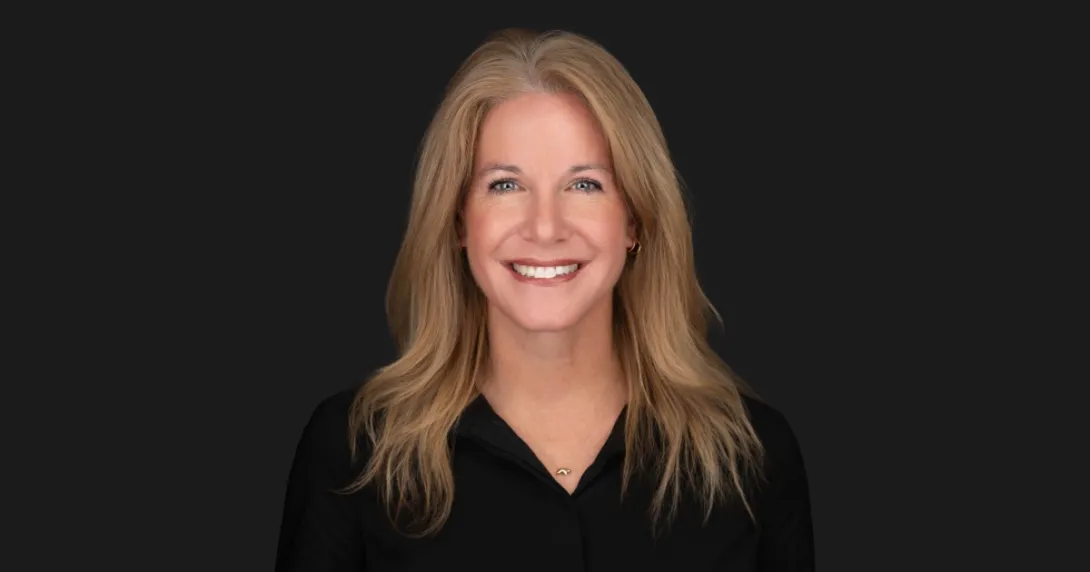
Megan Scheffel, head of healthcare and life sciences at Silicon Valley Bank
Photo courtesy of Silicon Valley Bank
SAN FRANCISCO – Nearly two years after Silicon Valley Bank's collapse sent shockwaves through venture-backed healthcare and MedTech companies, the bank’s head of healthcare and life sciences says its core strategy remains largely unchanged.
Megan Scheffel, head of healthcare and life sciences at Silicon Valley Bank, sat down with MobiHealthNews outside the JPM Healthcare Conference here on Wednesday to discuss the current state of investing, capital trends and why she says the bank’s core strategy has remained consistent following one of the largest bank failures in U.S. history.
MobiHealthNews: Tell me a bit about what you do at Silicon Valley Bank.
Megan Scheffel: I run our healthcare and life science practice.
So, we have a group of people, and we focus on biotech companies, MedTech companies, health tech companies, anybody in the life science and healthcare space, both from a banking and a debt perspective.
We are banking clients. So anything you need in terms of, if you think about your operating accounts, payments, investments – we do a lot of the banking, and it's pretty specialized for companies that are in the startup space. It's not, you don't walk into your everyday bank and get a relationship.
And then we do a lot of debt. Debt can be debt for building out manufacturing. It can be for working capital. It can be to help companies, where we really specialize as SVB, we really specialize in helping companies get from Series A to Series B, Series B to Series C, to your next round, to a biz dev [business development] agreement in the biotech space. Whatever your next inflection point is, that's where we're trying to help you.
MHN: What kind of trends are you seeing within these spaces as far as capital gains go?
Scheffel: We just released a report for 2025, and it really showed some barbells. There are a lot of mega rounds happening. And the mega rounds, you know, the 100 plus, and then there was a whole category of 300 million plus. If you take those out, the number of deals getting done has decreased over the past several years, but what it does show is that the quality of those deals is really high. So, the quantity isn't there, but the quality of deals is really high. The bar to get a deal done right now for Series A, Series B investments, investors will tell you that the bar just keeps ticking up a little bit.
MHN: Right. During COVID, digital health investment boomed. There was so much money coming into digital health. That started to decline a bit as the pandemic started to wean, but then mergers and acquisitions [M&A] began to tick up.
Scheffel: M&A's is pretty, again, it's on the later stage side. So, if you're a biotech company, they're acquiring companies that are near-term revenue to help with their patent cliff issues. There are a lot of big, mega transactions happening, and the opportunity for that's a little bit bigger with this administration. There are some bigger deals probably happening.
And then on the smaller side, there are really small acquisitions happening. They're not always fantastic outcomes for investors, but it means the technology, the idea, maybe an entrepreneur or some management team is living to fight another day. They're just probably involved with someone else.
MHN: Do you see any companies eating up other companies just to bury them?
Scheffel: I don't know if I would say they're burying them. I keep saying, like, there's clearance racks.
MHN: Silicon Valley Bank had a lot of difficulty in 2023 with the collapse. How has SVB pivoted, or has it pivoted?
Scheffel: Honestly, our strategy is the same.
I've been here for a gazillion and a half years, and there's ups and downs in the markets, and that remains the same. How we work with companies on upswings, like in 2021 when they all come flooding in, we work with clients the same way as when they're going down. You know, when there's decreased investments or when companies are struggling, our strategy is still the same.
We still really want to help companies, even if they're not raising $300 million rounds every six months. We still are trying to help find ways to support them and support their causes.
MHN: What are you looking for in companies?
Scheffel: Strategy is the same, but we're always looking for companies that have good management teams, ideas that have a moat around them, meaning there's some kind of innovative, some IP, some advantages.
Another thing that's interesting is that, I mean the ups and the downturns, it happens. And every downturn is when really good investors make really good money.
They start investing right now when the valuations are lower and the companies are better and execution is better, and there's no waste. Investors who invest right now have so much to gain.