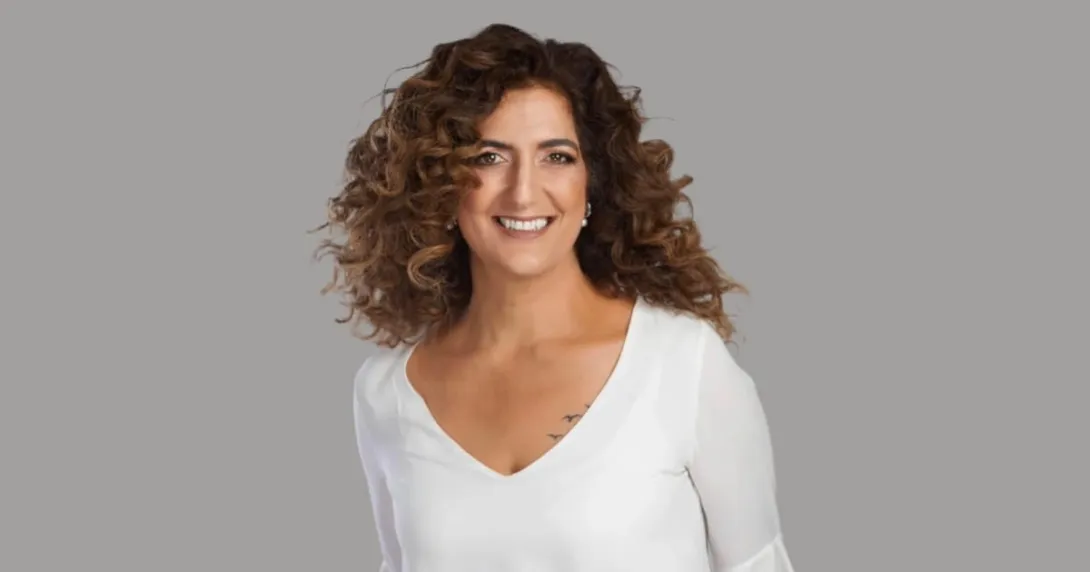
Dr. Sigal Shafran Tikva, head of the master’s in health informatics at the Jerusalem College of Technology and director of the research and innovation center in nursing at Hadassah University Medical Center
Photo courtesy of Dr. Sigal Shafran Tikva
Dr. Sigal Shafran Tikva, head of the master’s in health informatics at the Jerusalem College of Technology and director of the research and innovation center in nursing at Hadassah University Medical Center, tells MobiHealthNews about her upcoming workshop in March at the 2026 HIMSS Global Health Conference & Exhibition, where she will lead an interactive discussion on reframing nurses as digital care designers and essential decision-makers in the integration of AI.
MobiHealthNews: Can you tell me about the workshop you have planned at HIMSS26?
Dr. Sigal Shafran Tikva: Imagine stepping into a room where nurses are not being taught AI – they are using their lived experience to redesign it. In this workshop, small, interdisciplinary groups will work with real, de-identified clinical scenarios where AI is already in the mix: dashboards, chatbots, documentation assistants and alerts that may or may not fit the flow of care. Together, they will pause the "default future" and redesign those AI-supported workflows, so they protect judgment, compassion and safety rather than add noise and friction.
Using a guided co-design template, each table will decide what stays human, what AI should assist and what needs to be deliberately re-humanized because we’ve already lost too much to automation. In the final part of the session, the room will synthesize its insights into a shared "Top 10 Unmet Needs in AI-Enhanced Care" brief that will be circulated to HIMSS communities, startups and digital health leaders, so the ideas generated by nurses do not stay trapped on sticky notes.
MHN: Why is it important for nurses to be essential decision-makers when it comes to AI integration?
Shafran Tikva: Nurses are the continuous, human interface of the health system; they see every workaround, every broken process and every emotional micro-moment that never makes it into the data model. When AI is designed without them at the decision-making table, we get tools that technically "work" but practically miss the mark: misaligned task distribution, alert fatigue, erosion of trust and technology that adds clicks instead of creating capacity for care.
Positioning nurses only as end users is an unsafe innovation. When nurses are involved in the creation and decision-making processes, AI systems become more ethical, trustworthy and genuinely human-centered. This involvement ensures that AI supports clinical judgment rather than attempting to replace it and amplifies compassion rather than diminishing it from our workflows.
Nurses have an unparalleled understanding of patient care and the nuances of clinical environments. Their insights and experiences are crucial in designing AI systems that truly enhance our healthcare delivery, making it more efficient and empathetic.
MHN: What will attendees learn from the session?
Shafran Tikva: Attendees will leave with a very practical, repeatable method for mapping AI-supported workflows, identifying the clinical and emotional pain points, and then redesigning who does what – human versus machine. They will practice using a rapid co-design template that helps teams prioritize unmet needs, clarify where AI can safely assist, and spotlight one high-impact risk and one opportunity in nurse – AI collaboration.
Equally important, they will walk away with a co-created "Top 10 Unmet Needs in AI-Enhanced Care" brief they can take back to their organization, whether that is presenting the brief internally, sharing it with a vendor or using it to kick off a workflow redesign with their own teams. The goal is that they do not just attend a thought-provoking session; they leave equipped to lead human-centered AI conversations at home.
Dr. Sigal Shafran Tikva's HIMSS26 session "Designing Human-Centered Artificial Intelligence: A Nurse-Led Call to Action" is scheduled for Wednesday, March 11, from 11:00 a.m. - 12:00 p.m. in San Polo 3501A I Level 3 at the Venetian in Las Vegas.