population health

The editors of Healthcare IT News, Healthcare Finance News and MobiHealthNews discuss the telehealth bill that was scuttled in 2024, as well as what's ahead in 2025 regarding the RPM market, physicians' pay schedule and cybersecurity policy.

Susan Conover, Piction Health CEO and cofounder, discusses the company's collaborations with dermatologists in 20 countries to build its AI to ensure accuracy across skin tones and the organization's objectives thanks to recent funding.

HIMSS24
SVP of advanced analytics Pravin Pant and associate VP of interoperability strategy Michael Gould, both at ZeOmega, discuss how providers should adopt FHIR standards to achieve TEFCA compliance and enable easier data sharing with payers.

The company will provide training and support services in Washington state to help recruit and retain a behavioral health workforce.

HIMSS24
Dr. Donald Warne, codirector of the Center for Indigenous Health at the Johns Hopkins Bloomberg School of Public Health, advocates for the recognition of Indigenous medical contributions, including osteopathy’s origin in Shawnee and Otoe practices.

HIMSS24
Founder and president Manish Kohli discusses how the Pul Alliance for Digital Health and Equity assists nonprofits with workforce training and project management so they can better measure and demonstrate their impact on local communities.

Health and homelessness cannot be fixed until the continuum of care around a person is solved, said Gabriel Seidman, director of policy at Ellison Institute of Technology. Tracking and responding using data is vital at government levels.
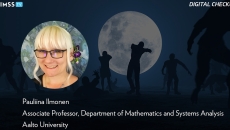
Paulina Ilmonen, mathematician at Aalto University in Finland, is heading a project simulating how a zombie apocalypse would spread to gain insights into the potential spread pattern of the next pandemic or a mass disinformation campaign.

The healthcare technology company will evaluate the impact of the City of San Antonio's Racial and Ethnic Approaches to Community Health (REACH) project.
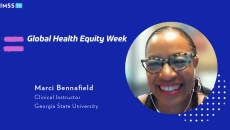
Clinical instructor at Georgia State University's health informatics program Marci Bennafield tells how mobile devices help researchers gauge health inequities and how customizing innovation can help address barriers to access to care.