Technology

Ceribell received breakthrough device designation for its LVO stroke detection monitor, and Naox Technologies secured 510(k) clearance for its in-ear EEG device.

Leaders say AI will reshape jobs without replacing the human core of care.
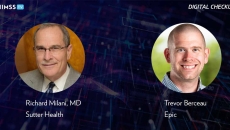
Sutter Health's Dr. Richard Milani and Epic's Trevor Berceau talk about Sutter's chronic care program, which integrates readings from remote monitoring devices into the EHR to give doctors continuous insight into patients' conditions.

A Mesothelioma Center report finds that more than half of Americans use ChatGPT for medical symptoms, widening a gap between patient reliance on AI and clinician concerns.

The state is piloting a program with Doctronic that allows AI to legally participate in medical decision-making for patients with chronic conditions in need of prescription renewals.

The collaboration will allow patients considering the oral GLP-1 therapy to access metabolic care through knownwell’s hybrid model.

Ahead of HIMSS26, Sairohith Thummarakoti of Texas A&M University–Kingsville previews his talk on how agentic AI and low-code platforms can automate routine claims and prior authorization workflows.

VeriFact analyzes statements in AI-generated clinical text against patients’ EHRs to identify factual errors, achieving 93.2% agreement with clinicians.
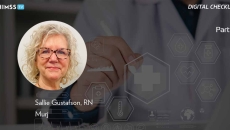
Sallie Gustafson, Murj's director of medical affairs, says Emory used smart remote monitoring technology that integrates with EHR systems to increase billable remote cardiac services by 52% despite minimal patient growth.

The extension allows providers to continue remotely prescribing Schedule II–V controlled substances under specific conditions to prevent a disruptive "telemedicine cliff."