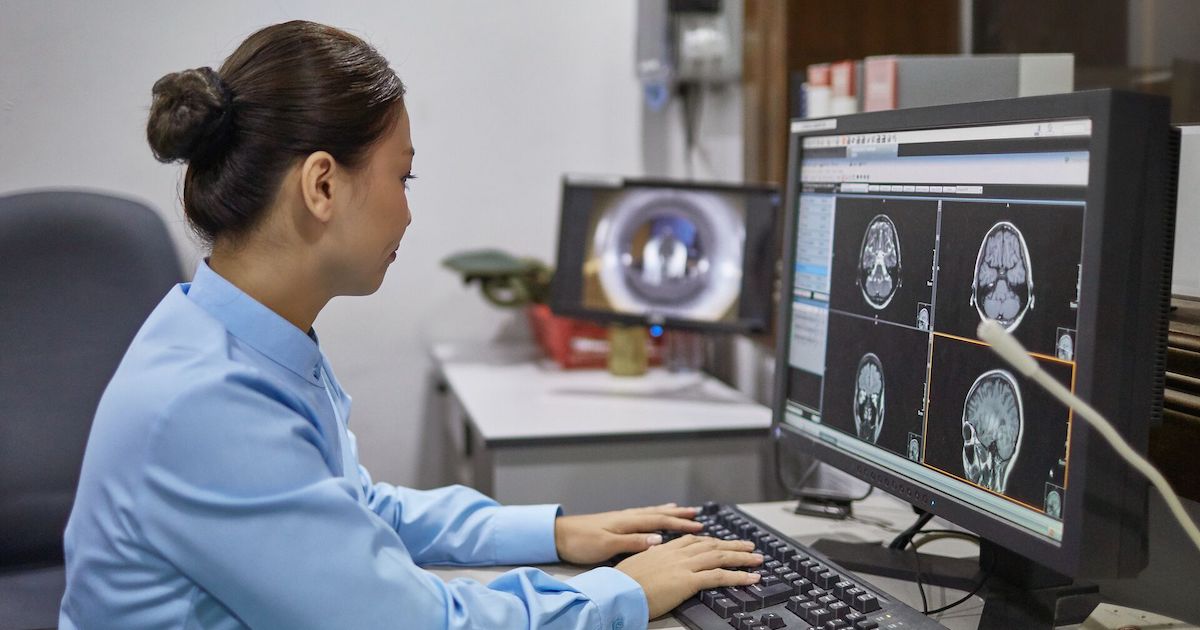
Photo: Waradom Changyencham/Getty Images
AI's rapid expansion across Asia-Pacific healthcare over the past year has left the region with a clearer sense of what works and what does not, as health systems moved beyond proofs of concept and began testing how AI fits into everyday clinical, operational, and financial decision-making.
Mobihealth News asked digital health founders and executives across the region to share their expectations for the year ahead, as AI shifts toward embedded, trusted, and responsibly governed use inside core healthcare workflows.
Dr Anindita Santosa, CEO, AIGP Health
Singapore
By 2026, AI in healthcare will be judged less on novelty and more on trust. The hype phase is ending. What comes next is accountability: systems that are explainable, regulated, and clearly aligned with clinical decision-making.
AI will move closer to the point of care, acting as a clinical co-pilot rather than a replacement. The most impactful tools will be those designed by clinicians who understand real-world constraints, not theoretical workflows. Importantly, AI will also play a bigger role in closing care gaps — extending specialist-level insight to settings where expertise is limited. In 2026, the best AI won't shout. It will quietly make care safer, fairer, and more consistent.
Dr Ben Condon, Clinical Director, Heidi
Australia
I believe the defining shift in Australian health technology in 2026 will be the normalisation of AI as core clinical infrastructure. These tools are already being used by clinicians at scale, but adoption will become more even as more innovative tools are built. This will enable more coordinated care across teams, without adding cognitive load for clinicians.
We're already seeing hospitals nationwide move beyond isolated AI pilots toward governed, system-wide adoption. This year, the focus must be on ensuring safety and clinical validation and continuously building AI that’s a trusted care partner for clinicians.
The most impactful AI may not be visible to patients, but its effects will be felt in many ways. Clinicians will be more focused, and waiting rooms will be less crowded, ultimately leading to better quality and consistency of care for patients.
Dr Raymond Choy, CEO, Heydoc Health
Malaysia
Looking ahead, AI in healthcare will evolve from isolated assistive tools into trusted co-pilots supporting better clinical decisions, sustainable financing, and scalable access, especially for underserved and resource-constrained populations across the region.
Dr Roman Rajek, co-founder, Back2U
Australia
We're already exploring AI to strengthen customer service, screening, matching patients with practitioners more intelligently, and reducing the admin load for practitioners. Used well, AI in 2026 should perform effectively but sit in the background, making care safer, faster and more coordinated while humans stay firmly in charge of the clinical decisions and the relationship.
Dr Gurpreet Singh, founder, CEO, Respiree
Singapore
In 2026, we will see more early-stage conversions into workflow adoption. We expect to see that in our portfolios.
Matthew Galetto, founder, CEO, MediRecords
Australia
In Australia, the biggest trend carrying into 2026 will be AI shifting toward embedded experiences and more meaningful experimentation inside core workflows, unlocking data that allows AI agents to support decision-making, automate routine work, and reduce the day-to-day burden on clinicians. We're already seeing EHR and practice management systems build these capabilities directly into their platforms, rather than relying on external or bolt-on tools.
Abhijeet Waykar, CEO, PredicTx Health
Australia
More broadly, AI in 2026 will be less about models and more about trust, systems that are explainable, validated across populations, and embedded responsibly into care delivery.
–
Some of the responses have been edited for brevity.