Provider

Aneesh Chopra, the first chief technology officer of the United States appointed by President Barack Obama and currently the chair of the Arcadia Institute, discusses how AI regulation has evolved through different presidential administrations.
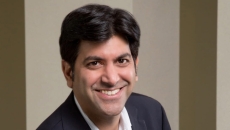
The first CTO of the U.S. discusses why he is bullish on AI's potential to enhance healthcare productivity, boost drug discovery and advance value-based care.
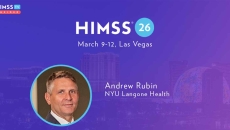
HIMSS26 speaker Andrew Rubin will discuss how NYU Langone Health established a service-oriented patient interaction program in its ambulatory care centers that has improved patient satisfaction.
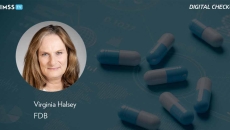
Virginia Halsey of FDB explains how Model Context Protocols set limits for AI models so they defer to human clinical judgment rather than guessing at answers. This prevents hallucinations that can impact patient safety.

A strong MFN law could be a meaningful step toward bringing U.S. prices in line with those paid by other high-income countries, says Patients for Affordable Drugs Now.
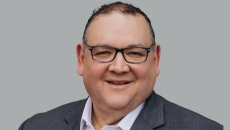
Terry Rubin, cofounder of The Professional Communicators, joins MobiHealthNews to preview his upcoming HIMSS26 talk, where he'll discuss problems that arise when experts focus on everything they know, rather than what their audience needs to understand.

Ovatient CEO Michael Dalton recommends that states use Rural Health Transformation Program money to move beyond hospital-centric care models and supplement local health services with virtual-first primary and specialty care.
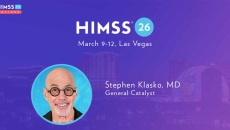
General Catalyst's Dr. Stephen Klasko discusses his keynote at the Smart Health Transformation Preconference Forum at HIMSS26, where he'll outline how healthcare can become truly patient-centered by being "tailored to the individual, and made swift."

The company launched a cloud-native operator console to replace legacy hospital switchboards and streamline call routing, alerts and communication workflows.

The integration embeds clinically validated speech analysis into video calls, enabling passive monitoring of cognitive and emotional health trends.